
How to Search Pointe Coupee Civil Dockets
Civil, family, and succession files for the 18th Judicial District Court sit with the Pointe Coupee Parish Clerk of Court. The ClerkNet public-record portal is the place to begin. The portal advertises cases, dockets, minutes, document purchases, PDF or print options, and civil e-services. One catch: it needs an account. The public landing screen shows no party-name, case-number, or case-type search form, so what you see before login confirms a product rather than what a Pointe Coupee civil docket looks like after sign-in. Gather the parties' names, a likely filing year, and any docket number. Decide early where the matter belongs. It may sit in the 18th JDC, a Justice of the Peace court, or a town court. The clerk's records line is 225-638-9596. The office sits at 201 E. Main Street in New Roads. Staff can confirm civil index coverage. They can also confirm a case number, post-login fields, copy fees, and the process for older files. Treat an account screen as a starting point, not the final answer.
- Open ClerkNet and use the required account or subscription process for Pointe Coupee civil records.
- Search with the most specific party name, case number, and filing-year information available.
- Save the exact case number, court division, and latest docket or minute entry before seeking a document.
- Use the official calendar only as a date clue, then confirm a civil setting with the clerk or judge’s office.
- Request a plain or certified order, judgment, minute, or other document from the custodian after identifying it by title and date.
Pointe Coupee Civil Docket Index Coverage
The public ClerkNet index for Pointe Coupee civil cases runs from November 4, 1991 through the current date. That date marks a real boundary for a docket search. It does not promise that every older file, document image, case type, or lower-court record is online. Older files may simply be absent. For an earlier Pointe Coupee civil docket, succession file, or probate record, ask the clerk about bound docket books, paper files, index books, microfilm, or archive retrieval. Give a rough year and the record type.
| Visible ClerkNet control or product | What is confirmed publicly |
|---|---|
| Email and password | Login is required on the public landing page. |
| Set up new account | Account or subscription enrollment is offered. |
| Civil records | The portal states civil coverage from 11/4/1991 to current. |
| Cases, dockets, and minutes | These categories are advertised, but search fields are not publicly visible. |
| Party, case number, date, or case type | Post-login availability remains unconfirmed without lawful account access. |
Note: ClerkNet's sample civil record is not public, so ask the clerk to confirm the local field names and number formats for any Pointe Coupee civil docket entry.
What a Civil Docket Shows
Think of a Pointe Coupee civil docket as the chronology of the court file. It is not the file itself. A full reading can include the case number, filing date, court division, judge, case style, parties, attorneys, petition, service, answer, motions, notices, orders, setting, judgment, and post-judgment event. Preserve those fields whenever they appear. None of this describes a confirmed ClerkNet display. The portal's post-login record view stays behind its account wall.
| Case and parties | Retain the exact case number and the plaintiff or petitioner and defendant or respondent roles shown by the custodian. |
|---|---|
| Opening papers | A petition or complaint, citation, and service or return event establish the start of the civil record. |
| Responsive filings | An answer, reconventional demand, intervention, or third-party demand may change the case path. |
| Motions and settings | Rule dates, notices of setting, memoranda, oppositions, minutes, and signed orders may appear chronologically. |
| Judgment and later events | Verify a final judgment, dismissal, default, appeal, writ, or garnishment through the actual clerk record or certified copy. |
Pointe Coupee Civil Docket Documents
A docket entry tells you an event or filing exists. The filed document is the petition, answer, motion, exhibit, order, judgment, or minute itself. A certified copy is a clerk-authenticated reproduction. It is meant for formal use. ClerkNet advertises document purchases plus PDF or print downloads. Its public page lists no image price, though. It also makes no promise that every record is online. A Pointe Coupee civil docket entry can be visible. Its order, exhibit, or other image may still need a separate request. If an image is missing, contact the clerk. Call, email, fax, mail, or visit the Pointe Coupee office with the case number, document title, event date, desired copy type, and delivery preference. Ask whether a courthouse terminal can display the file. Also ask whether archive retrieval needs notice. The clerk remains the primary court-record channel. A statewide clerk remote-access route exists for participating hosted records, but that is another channel, not proof of complete local civil coverage. A general parish public-record request form also exists. Yet the clerk may not accept every court-copy request through it. Use that form only if the clerk points you there.
The 18th JDC orders and forms page identifies official forms such as guided divorce, name-change, child-support, waiver, and in-forma-pauperis materials. 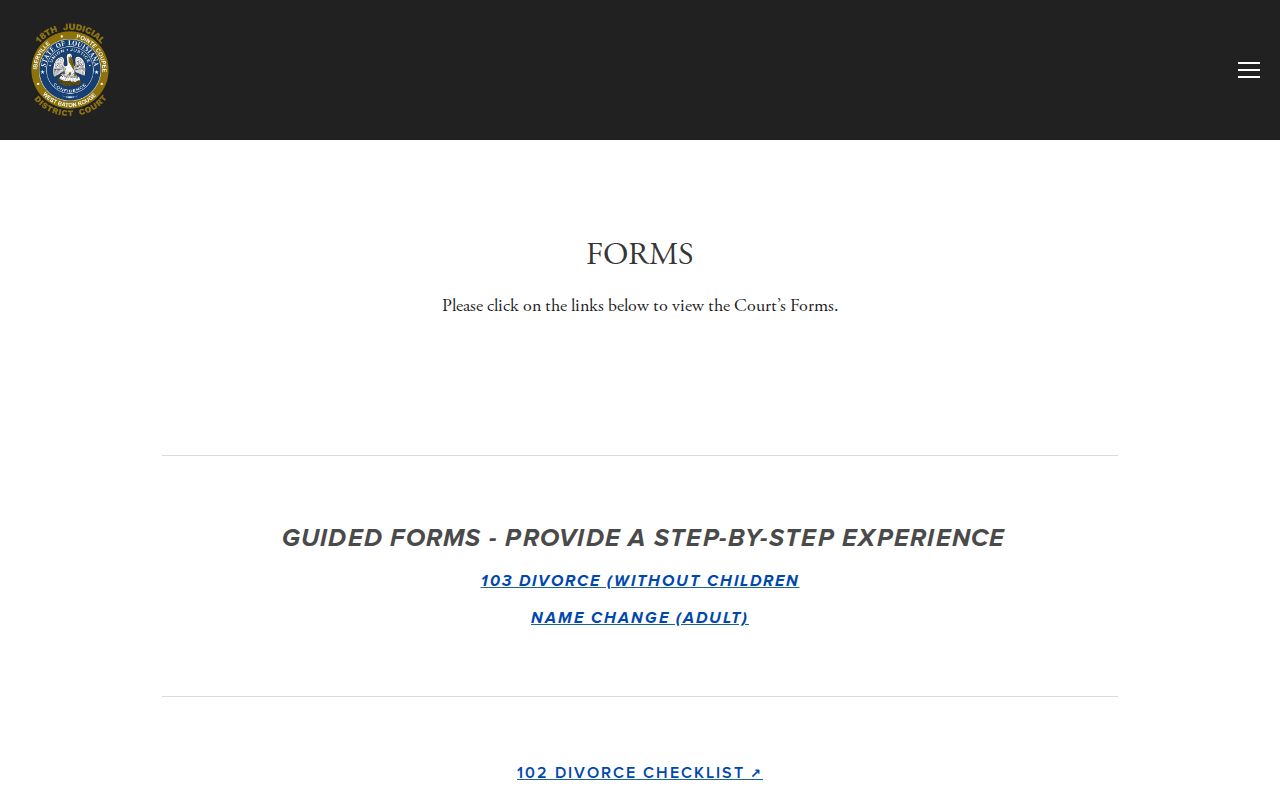 Forms can help identify a civil filing type, but the docket and the court file remain the source for activity in a particular case.
Types of Civil Cases on the Docket
Civil matters on the Pointe Coupee 18th JDC docket span general civil, family, and succession cases. The ClerkNet field inventory is unverified. Even so, the case style and the filings tell you more than any broad label. District-court civil cases can involve petitions, answers, motion practice, rule dates, judgments, and post-judgment enforcement. Preserve the roles and relief the docket actually shows. Do not assume every civil case follows one sequence.
- General civil claims and other district-court disputes.
- Family matters where access is not restricted by law or court order.
- Succession or probate matters maintained by the district-court clerk.
- Property or title matters that belong in district court rather than JP court.
- Post-judgment proceedings such as appeal, execution, garnishment, or judgment-debtor examination.
Pointe Coupee's lower courts work under different limits. A JP court cannot hear divorce, alimony, succession, interdiction, title to real estate, or the specified public-body claims. Match the case type to the right court before any civil docket search.
Pointe Coupee Civil Docket Calendar Limits
The official 18th JDC printable calendar lists civil rule dates. It does not cover every civil hearing or trial. The court says it outright. Changing civil hearings and trials are omitted. An unlisted date is not evidence that a case has no setting. A rule date is a useful docket event. But it is distinct from other hearing and trial dates. Keep the case number, division, and the exact wording of any setting when you call to confirm.
For a Pointe Coupee civil docket date, use ClerkNet first, then call the clerk or assigned judge’s office. The court has four divisions and publishes individual office information. Division A’s official page provides its Pointe Coupee office information. 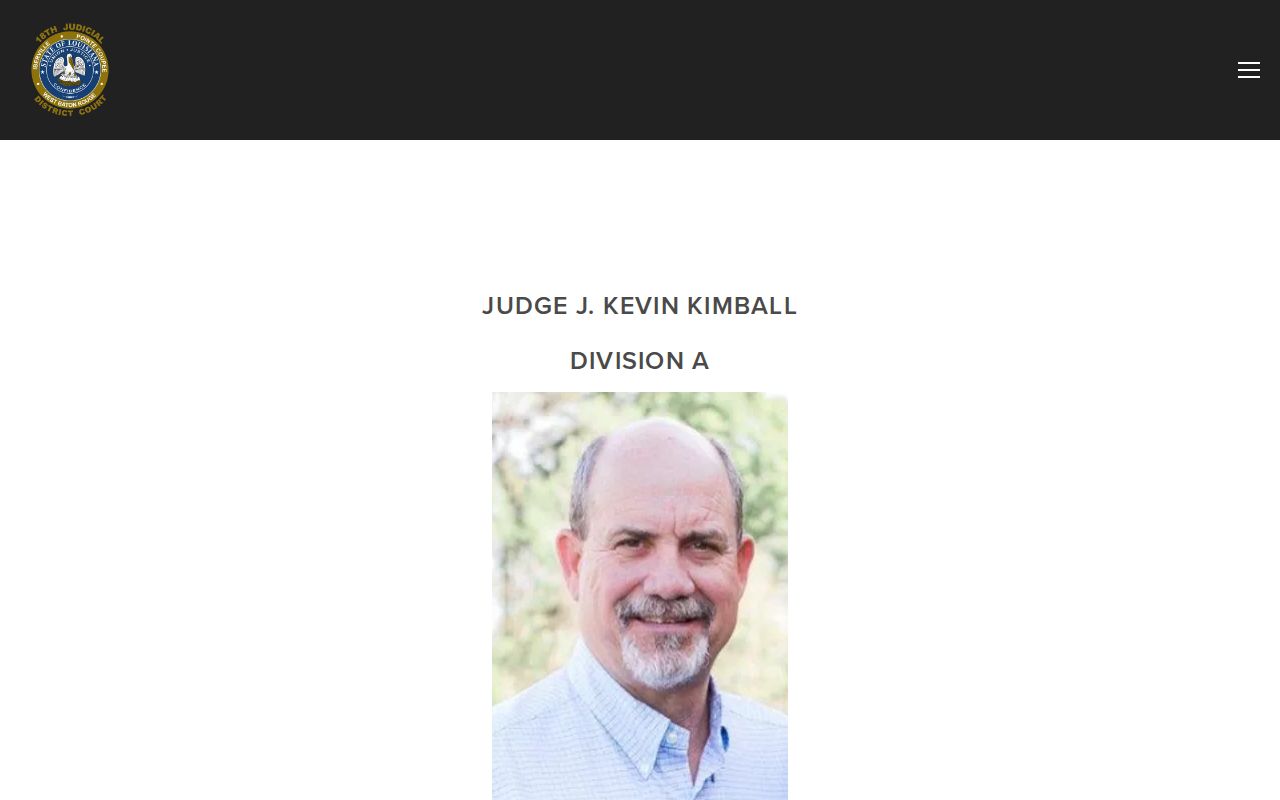 The office can clarify a division-specific setting, while the clerk remains the record custodian.
Settings and Hearings on Civil Dockets
A Pointe Coupee civil docket can carry many kinds of entries. Settings and rule dates appear. So do motions, memoranda, oppositions, signed orders, discovery activity, and judgments. Some words describe timing rather than outcomes. A continuance moves a scheduled matter, and a reset changes its setting. Neither one tells you how the case ended. Read the later docket entries or minutes for the result. When the printable calendar leaves gaps, confirm the new date with the clerk or the judge's office.
- Civil rule date
- The term used by the 18th JDC calendar for its published civil setting category.
- Default judgment
- A judgment entered when the required response or appearance has not been made, subject to the rules that govern the case.
- Continuance
- A court-approved delay of a scheduled event.
- Judgment
- The court’s signed decision or order resolving an issue, which should be confirmed from the actual record.
Division B’s official page identifies Chief Judge Tonya S. Lurry and publishes division contact information. 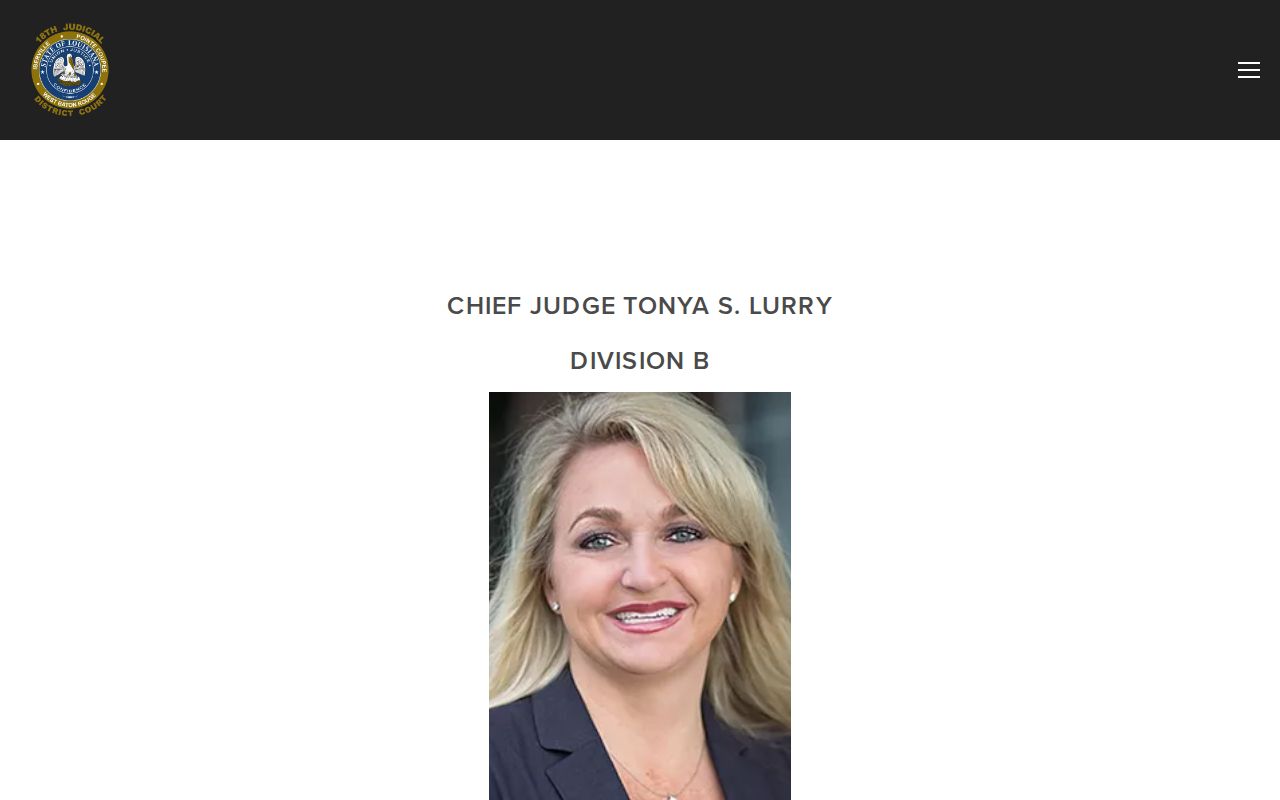 A division contact can help confirm a changing civil setting, but it does not replace the clerk’s docket or record copy.
Pointe Coupee JP Civil Docket Threshold
Small civil matters in Pointe Coupee Parish often do not sit in the 18th JDC at all. That is the first thing to know. Evictions and claims up to $5,000 land with one of twelve Justice of the Peace courts. Which JP depends on where the defendant lives, since venue follows domicile. The parish's official JP and constables directory gives each district's address and phone. These offices keep their own civil files, apart from the district clerk. So a miss on a district-court portal is not proof the case is missing. It usually means the right next step is calling the proper JP office.
The JP small-claims instructions work differently than a district docket search. Court sessions are set once a suit is filed. After service, a defendant gets ten calendar days, holidays included, to file an answer. That setup is why no recurring public calendar exists to match the 18th JDC PDF. Costs run on advance deposits. The schedule warns the final total can top the deposit. Treat those figures as JP charges, not the district clerk's certified-copy fees.
The official Division C page identifies the district-court division. 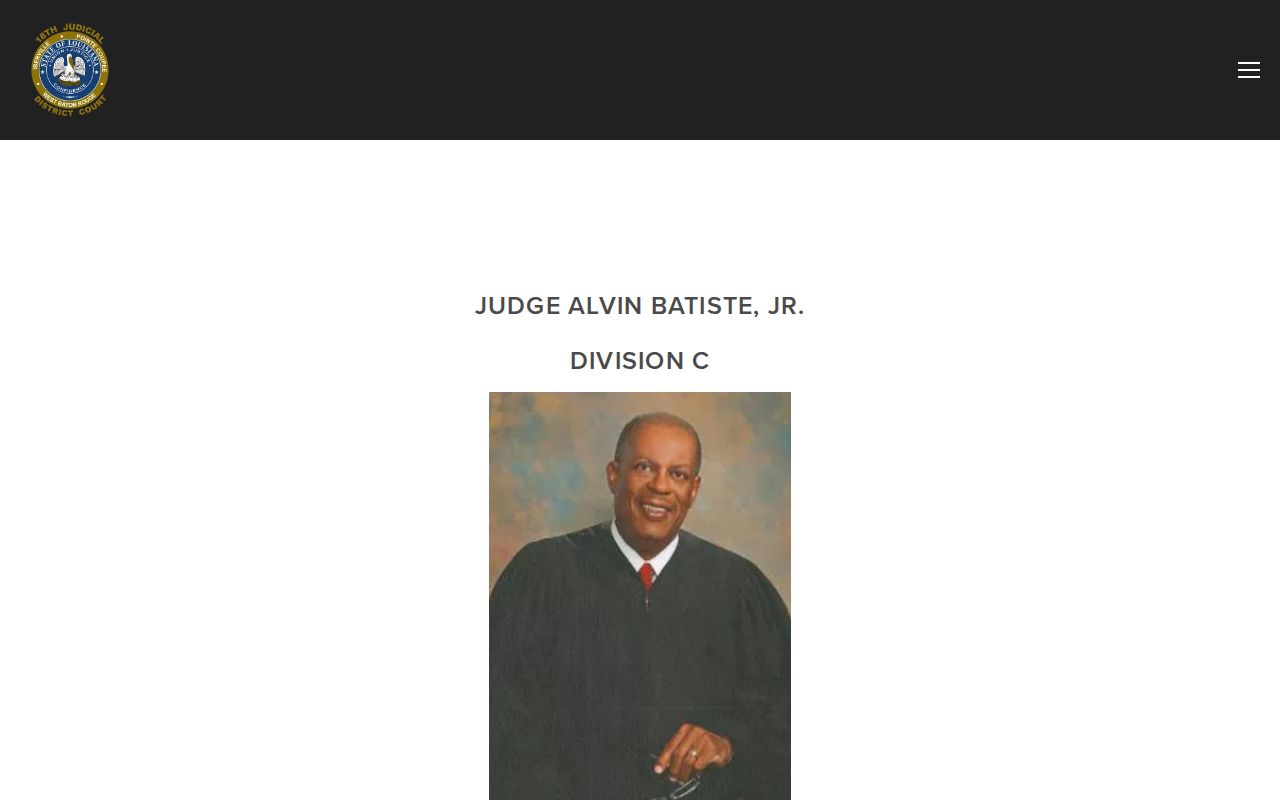 A division page helps distinguish the 18th JDC route from a JP civil docket held outside the district file.
Pointe Coupee Civil Docket Filing Context
For scale, look to the state's top court. The Louisiana Supreme Court's 2025 Annual Report puts 543 civil filings for Pointe Coupee in its 18th JDC table. That is a count of cases filed, nothing more. It is not pending inventory, a clearance rate, or a headcount of people. The same parish row lists one civil jury trial. It also shows an average of 233 days from filing to disposition. Bench trials, defaults, settlements, and most lower-court matters go uncounted there. So read the row as context for a civil docket search rather than a map of any single case.
That 233-day figure is a parishwide average. It promises nothing about your case. No hearing is guaranteed on any particular date because of it, and a copy request will not take that long by rule. A Pointe Coupee civil case can also carry a reported filing-to-disposition time while its hearing or trial date never shows up on the public calendar at all.
Public Access to Civil Dockets
Public access to a Pointe Coupee civil docket starts with the clerk. It also runs through the court holding the file. A docket or index can show filings, events, settings, and minutes. It cannot promise that every document behind those entries is public or viewable online. Judges can seal or restrict a record. Louisiana law also requires personal identifiers to be left out of filings. So a public document may be redacted while its docket entry stays visible. Cases involving children, juveniles, safety concerns, or some family matters face added limits.
Key rules for Pointe Coupee civil docket access:
La. R.S. 44:31 provides a right to inspect, copy, and reproduce public records unless an exception applies.
La. R.S. 44:32 covers custodian procedures, record presentation, copies, and fees.
Louisiana’s court-filing privacy rule excludes listed personal identifiers from filings.
Pointe Coupee Civil Post-Judgment Docket
A judgment rarely closes the Pointe Coupee civil docket. Post-judgment filings can pile up fast. An appeal, a motion for new trial, a writ of execution, a garnishment, or a judgment-debtor examination may each add new entries to the court record. The justice-of-the-peace schedule lists several of these procedures by name. What it publishes, though, are advance deposits and fees for its own office. Those figures say nothing about the parish clerk's district-court charges for copies or certification, and no official schedule for those costs appears in any public source.
Request a certified judgment or order from the actual custodian when an authenticated copy is required. For a verbatim hearing record, use the 18th JDC court reporter route, not the clerk’s docket-copy process. The official Division D page is one of the court’s division contacts. 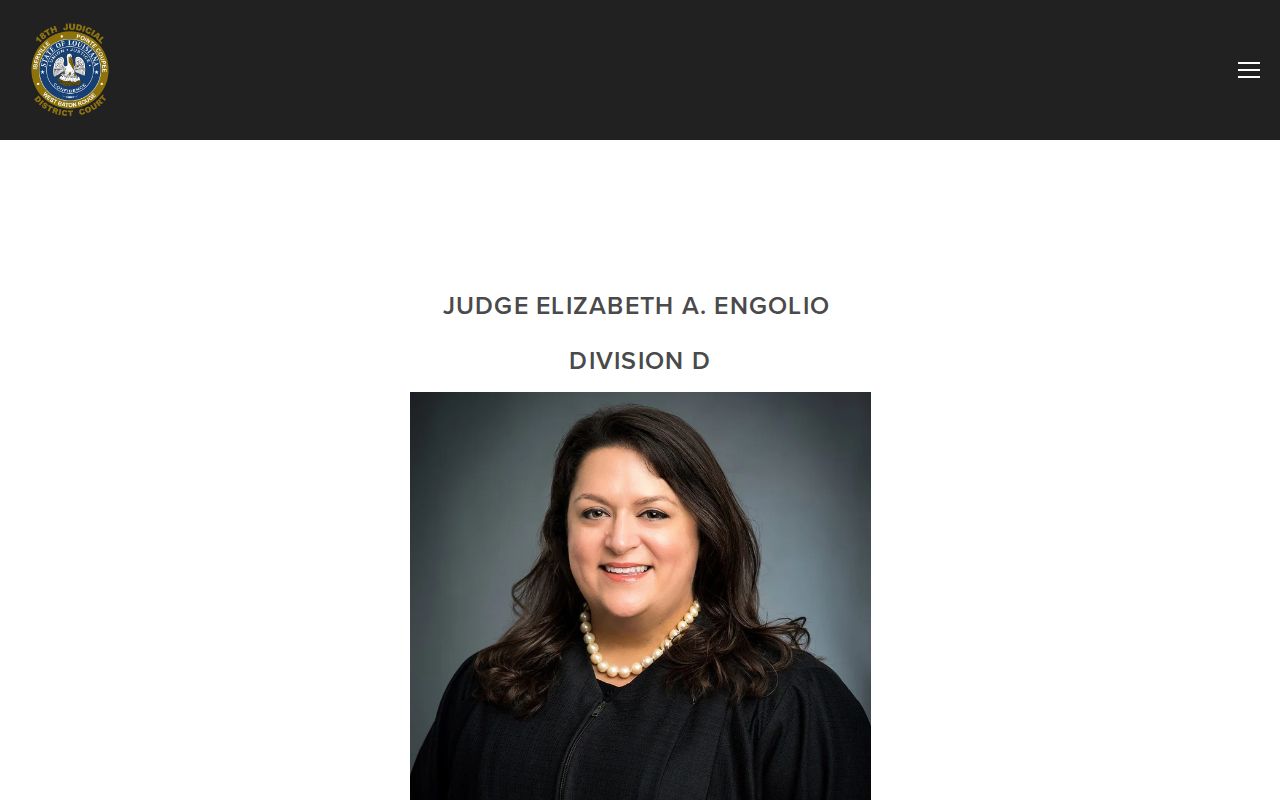 Division contacts may clarify a setting, while a certified record request belongs with the clerk or other court custodian.
Note: The Pointe Coupee district court posts no fee schedule covering a plain copy, a certified copy, a per-page charge, or a ClerkNet document image. Ask the clerk's office for current costs.